Showing posts with label how to.... Show all posts

Sunday, 19 April 2009

How to...get from Belgium to England

There are, of course, many ways to travel between Europe’s cities and across the English Channel, including train, ferry and bus. For us, with it being Easter week and without advance purchase, the Eurolines bus was our most economical option.

Eurolines connects city centres in about twenty-four European countries. After the mammoth bus journeys of Mexico and Laos a paltry seven hours between Antwerp and London no longer seemed an obstacle. At an equally paltry 46 Euros, the price was just too tempting to turn down.

The bus arrived early in Antwerp, but was already stuffed full of slumbering bodies and Amsterdam casualties, making inserting ourselves into the legroom-deficient seats a little challenging.

We had opted for the overnight bus departing Antwerp at 23:30 (the other service leaves at midday) and had resigned ourselves to a sleepless night. After a couple of hours the bus stops in Calais at French immigration. Here you disembark and shuffle into French immigration and out again and then into British immigration next door. The new UK Border Agency was a jolly, dapper bunch; it was nice to be welcomed home by fresh-faced chaps in crisp, navy uniforms.

You then wait on the bus until it drives onto the ferry to Dover. You have to get off the bus for the hour and a half ferry crossing across the English Channel. Time enough to settle down for a sleep, or get something to eat or drink. Make sure you remember how to get back to the bus, for once boarding is called the bus doesn’t wait for stragglers.

Then it’s just another couple of hours from Dover to Victoria Coach Station in Central London from where onward buses are plentiful.


Bookmark and Share


Read more...

Sunday, 29 March 2009

How to…travel by public transport around the USA

The USA is an enormous country where the car is king. Travelling around by public transport is not the norm and even most guidebooks assume you are driving everywhere. Gathering information about public transport has been time consuming, so to save you the hassle here‘s what we found out.

Buses
It is possible to get around most of the US on the bus, although in comparison to Mexico the bus system is far behind. Greyhound has elicited groans for years, and yes it is grim, but thankfully some better buses, such as Megabus, are starting to challenge their stranglehold.

If you’re first in the queue for the bright blue double-decker Megabus you can secure a table and four chairs in front of a video screen, and if you’re lucky they will be playing films. The seats are comfy with leg room and the onboard toilet is useable. Despite the better quality the prices are often cheaper than Greyhound. We met a woman who had bought a return from Chicago to Detroit (a five and a half hour journey) for $2.50. Buy in advance and you can get a real bargain. They keep their prices low by offering a no-frills service; you can only buy tickets on-line (you get a reservation code that you show upon boarding), you have to put your bags in the hold yourself and they have no bus stations (only bus stops by the side of the road). The only disadvantages that we found are that the service only serves the north/northeast of the country and if the weather is bad you have to wait for the bus in the rain.

The Megabus drivers are great entertainment, each seemingly running their bus in the manner they seem fit. Our Chicago to Minneapolis driver made the rules of the journey clear to its mainly springbreak passengers,
“No chewing gum loudly - no smacking or cracking. Gentlemen please raise the toilet seat and put it down again. Don’t play music loudly - that’s what headphones are for.”

On the other hand Durrl (spelt Darryl on his name badge), our Minneapolis to Chicago driver, was a one man entertainment machine. He was playing his personal collection of DVDs (“I thought the kids might like Iron Man”) and was genuinely sorry when the DVD kept skipping over the rutted roads of the Mid-West. He grinned back over his shoulder, while battling to keep the bus upright in strong winds and rain, until he got the thumbs up from us that the volume was fine. As Blades of Glory skipped itself to the end Darryl changed tack and got on the PA system,
“Ladies and gentlemen, for the first time ever in Megabus history this is your chance to come down to the front and make an announcement over the microphone. Come on down!” No-one budged so Darryl continued,
“We got a beautiful girl upstairs on her way to become America’s Next Top Model and we got some world travellers sitting here right behind me on the lower deck.” A shout-out on the Megabus - it doesn’t get much classier than that! And on he whittered congratulating people for the size of their phone or the food they were eating until finally some passengers came down the stairs and grabbed the mike,
“I’d like to say thank you to the driver for getting us here safely and to say happy birthday to my nieces for Thursday.” A round of applause. Durrl liked that and came back with an Eddie Murphy style,
“O, o, oooh! We’re gliding like Egyptian silk!” This man clearly enjoys his job and made the eight hour bus journey so much shorter. Public transport has never been such fun.

There are, apparently, a few bus companies travelling between one city’s Chinatown to the next (various websites, just google ‘Chinabus‘), but again only serves the northeast at present. The buses are, apparently, of about the same standard as the Greyhound, but are cheaper. Boston bus station has a particularly good array of bus companies serving different destinations.

When all else fails there is the Greyhound. It does connect to most cities in the US and is often cheaper than taking the train. We didn’t find it a dangerous experience, just a depressing one, with some of the worst customer service we’ve encountered on our trip. However, it works and we used it extensively between Texas and Ohio. Check for deals online and, if you can, book ahead because when you book more than three days in advance your travel partner gets a half-price ticket. You need to arrive at the Greyhound station an hour before departure to pick-up tickets (you just get a reservation code online) or to purchase tickets. They never seem to sell out, and if a bus is full they just put on another one for the same journey.

When you’ve bought your ticket put your bags in the queue by the departure gate - you want to be one of the first on the bus so you can pick good seats (we prefer near the front and as far away from smelly people as possible). You and your hand luggage may be subject to an airport style security check and frisk, as was the case in Memphis, so keep penknives, scissors, nail files etc. in your backpack for the hold and not in your hand luggage. Greyhound buses are fairly standard coaches but lack the comfort and movies of the Mexican buses, so take your own entertainment.

Both the Megabus and the Greyhound stop every few hours for a loo and food break. Greyhound seems to have a close relationship with fastfood chains, whereas the Megabus usually stops at a service centre where you can make your own choice.

Trains
Travelling by train is definitely our preferred method of public transport in the US. The seats are comfy with plenty of legroom, there are plug sockets so you can work on your laptop, there’s a dining car and the toilets are acceptable. They are better than British trains in terms of comfort, although delays are also not unusual.

The view from the train is often much better than the soulless, corporate chain lined interstates that the buses favour. The train can take you through farmland and forests and alongside rivers and lakes.

Amtrak runs the trains in the States. You can buy tickets on line or at the station, with online sales offering the best deals. There are weekly ‘hot deals’ and if you are planning to travel extensively during a two or three week period, a rail pass could be a good option.

Turn up 30 minutes to an hour early to collect your tickets (if purchased online) and wait to be directed, or sometimes escorted, to the train. The waiting areas in the stations are generally more comfortable than those for buses.

The only drawbacks for us have been that Amtrak does not operate services across the whole country and only in the northeast does the service seem to be frequent.

Travelling around the States on public transport is perfectly possible, provides a great insight into parts of America you might not otherwise encounter and can even be great fun. If only there was a Durrl on every train and bus!


Bookmark and Share


Read more...

Sunday, 1 February 2009

How to…get in to, around and out of Guatemala

Getting in
Guatemalan immigration is so relaxed that we had to ask for an entry stamp at the Cuauhtemoc/La Mesilla border crossing from Mexico. There was no fee and we just strolled right through. Most tourists don’t need a visa to enter Guatemala and will be given a ninety day tourist stamp on arrival.

We were on a shuttle bus from San Cristobal de las Casas, Mexico, that dropped us off at the border and transferred us to another bus on the other side where we continued to Panajachel, Lake Atitlan.

Getting around
Shuttle buses are the tourist speciality in Guatemala. The travel agencies know the places that tourists want to go and provide direct buses between them. All the towns we went to (Panajachel, San Pedro del Atitlan, Antigua, Coban, El Remate) had plenty of tourist agencies where you hand over your quetzals and get collected and delivered door to door. The service isn’t quite as efficient as the price would suggest; we found that adding two extra hours onto the quoted journey time was nearer the truth - mañana is a popular word and attitude in Guatemala. The tourist shuttles are easy, but are nowhere near as cheap nor as atmospheric as Guatemala’s famous chicken buses.

Chicken buses are brightly repainted American school buses - old, rickety and polluting - but cheap as chips. Good for short distances, but notoriously painful over long distances - bucket seats, no suspension and black fumes belching in through the windows. They are also considered unsafe by some (including the British Foreign Office who don’t allow their staff to travel on them) as robberies and murders are a possibility. Indeed, the tabloid papers are full of daily reports of bus drivers shot dead in Guatemala City - often because they drove through the wrong zone or didn’t pay their dues to the gang lords. You can take your chances and many people we met had travelled across the whole country on chicken buses without incidence. Anyway, isn’t a tourist bus richer pickings?

Chicken buses are being phased out and already in some parts of the country the only option is between a public minibus or a tourist minibus. Most travel agencies will fix you up with a shuttle bus (minibus) or you can go to the local bus terminal and talk to the drivers until you find the right minibus to your destination - the timetables seem to change regularly.

Large first class coaches plough selected routes. We travelled with Monja Blanca from Guatemala City to Coban on a bus resembling Dukes Travel in the eighties. Not the swish first class bus of Mexican standards but fit for travel. We were joined by a colourful bunch of Guatemalans, some in indigenous huipiles and stripy skirts, many in cowboy hats and one lady with some chickens and vegetables wrapped up in a bundle. Do chickens on a bus make it a chicken bus?

We were fortunate and travelled across Guatemala safely, as did all the other travellers we met.

Getting out
We took a shuttle bus from El Remate to Belize City passing through the Melchor de Menchos border crossing - the only land crossing between Guatemala and Belize. We were stamped out of Guatemala and asked to pay a twenty quetzals fee (£1.80). This is, apparently, a municipal fee to fix the muddy, potholed road that, apparently, “the tourist chew up”. When I challenged the charge, having been told that there should be no fee entering or leaving Guatemala, we were told that it was “nothing illegal” although, conveniently, the chap in charge of producing receipts was having a day off. The road really did need fixing though.

The entry to Belize was easy and efficient. British citizens get a one-month tourist stamp on arrival. We were then questioned by customs in indecipherable pidgin English as to whether we were carrying any fruit, vegetables or alcohol - negative - and suddenly queen Elizabeth II was looking up at us from the banknotes. Adios Guatemala!

Read more...

Friday, 23 January 2009

How to…volunteer in Guatemala

Let’s face it, travellers are masters of time; no alarm calls, no deadlines, no chores. When the biggest task of the day is deciding which restaurant to eat in perhaps it’s time to seek out something else to do instead.

After seven months of travelling I was feeling the urge to get off my bus-sore bum and do something useful; to get a deeper understanding of the country I was visiting and, hopefully, be of some help as part of the deal. Guatemala is full of opportunities to get involved with the local community, not in the ´pay three thousand pounds and you can help’ way, but where there are minimal, or no, admin overheads and you just have to give your time.

There are a number of websites that list some of these volunteer opportunities in Guatemala and most spanish language schools have links with local projects:
http://www.idealist.org/
http://www.voluneerpeten.com/
http://www.casa-guatemala.org/
http://www.arcasguatemala.com/
www.volunteerabroad.

I was fortunate to get hooked up with Los Patojos (http://www.lospatojos.org/) through my language school.

“This is my revolution," declared Juan Pablo Romero Fuentes, the Director of Los Patojos, as he proudly gazed over the brightly painted yard full of children running, laughing and generally creating havoc.

This young revolutionary has transformed his house in Jocotenango, on the outskirts of Antigua, into a school for los patojos (meaning ´the little ones´) from less privileged households.

Starting with just three pupils the school is now bursting at the seams with over one hundred children. Many of the pupils found their own way to this school, its reputation spreading through the children’s gossip. They come because they want to learn and because their parents lack the will or the money to send them to public school. Although school is free in Guatemala, many children don’t attend because their families cannot afford the books and pens or because their family needs them to work. The streets of Guatemala are full of children selling chewing gum, fruit and offering shoe shines. I even met an eight year old running an Internet cafe. To give children the opportunity to go to school as well as work, some of the public schools run in the afternoon. Los Patojos is also open for education in the afternoons only. The children stream in from 2pm and run around for half an hour before being served a nutritious lunch followed by a tooth brushing session. Lessons follow and when the work is done there is more play time.

There is as much, if not more, emphasis on social interaction and fun as there is on lessons. The school aims to build the self-esteem and abilities of the children, teaching them to believe in themselves and make the most of their lives. If there’s a lack of love in the home, it is given in double doses in the school. It’s a wonderful project. I am not qualified to teach but I could make the lives of the teachers easier. For a couple of afternoons I helped make musical instruments out of drinks cans and beans for the children to decorate, and prepared exercise books. Easy stuff, but it frees up the teacher’s time to concentrate on more important things. And everyone gets involved in the rough and tumble of playtime at the end of the day.

The Patojos website proclaims, "We are powerful because we are children,” and witnessing the energy in this school, I believe it. So if you ever find yourself in a dilemma unable to decide between going to a cafe to read or mooching around a museum and fancy doing something different, get in touch with Juan Pedro (Jpromerofuentes@gmail.com), or one of the many other volunteer organisations listed above, and go and help out.

Read more...

Monday, 15 December 2008

How to…get to Mexico from El Paso, Texas

The El Paso/Ciudad Juarez border crossing ranks as one of the most shambolic we have crossed so far. Confusingly you need be in Mexico to get the papers to allow you to be in Mexico. Given the rigour of U.S. immigration upon arrival we were expecting a similar grilling upon departure, but on our bus journey from El Paso to Chihuahua there was no sign of American immigration.

The two adjoining cities straddle the border and immigration controls are confusing. Upon entry to the U.S. we were told that Mexico is considered a contiguous region with the U.S. so that for stays under 30 days we would not need a visa or tourist card to visit. It would also appear that U.S. citizens and World in Slow Motion backpackers with a U.S. visa can visit certain parts of Mexico within a certain distance of the border (e.g. to Ciudad Juarez) without a visa/tourist card.
Not wanting to chance it, we took the advice of the Foreign Office who state that British citizens need a tourist card to visit Mexico, which allows for a 180 day visit.

Given the lack of available information the following tips may help anyone taking the same route (El Paso to Mexico) by public transport. We cannot state the following as fact, but based on our experience so far we hope the following helps:
1) To get your Mexico tourist card go over the Avenue Juarez bridge from El Paso (U.S.) into Ciudad Juarez (Mexico). There is a covered pedestrian gangway and no questions were asked when leaving the U.S.
2) When over the bridge (across the border into Mexico) walk two blocks to the east to the Mexican Immigration Office on Avenida Lerdo.
3) Here you fill in a form, get a copy (this is the tourist card) and get a Mexico entry stamp in your passport.
4) Now you can choose whether to get a taxi to the bus station in Ciudad Juarez for onwards travel or get a bus from El Paso. We opted for the latter (it seemed simpler) so had to go back over the Avenue Juarez bridge (it costs $0.30 for pedestrians) through U.S. immigration back into El Paso, Texas.
5) Our bus then crossed the border to Chihuahua without a single piece of paperwork being checked, either on the U.S. or Mexican side of the border. There was nowhere to surrender our U.S. departure card, which we need to do as we will be out of the country for more than 30 days, so we will have to visit the American Embassy when we reach Mexico City. Apparently you can skip the queue and go around to the window at the back of the building.
6) When in Mexico, you need to go to the bank (any bank) to give them your tourist card and pay around $30 USD in exchange for a receipt. You need this receipt to leave Mexico.

As we’re not 100 per cent sure that the information we have is correct, we’ll be updating this page as our adventure continues, when we leave Mexico for Guatemala/Belize and then re-enter, before entering the U.S. one more time. In the meantime, if anyone knows more than us, do let us know…

Read more...

Monday, 13 October 2008

How to…travel around China

With an area of nearly 10 million square kilometres and a population of over a billion, a good public transport system is essential to China. We have been surprised and relieved at how easy it has been to get around.

Trains
Travelling by train in China is the best way to see the bits in between; the real life away from the sights and cities. However, catching a train is manic and buying a ticket a trial. It’s a very Chinese experience.

You can only buy tickets from the city you are departing from. In Shanghai main station this is at window 43 and in Beijing main station it’s at the window labelled ’foreigners’. You can also buy tickets at ticket booking offices in town or from your hostel, for a small commission. Staff at train stations rarely speak English so get a local (such as hostel staff) to write down your destination and desired class of travel in Chinese before you go. You can find train routes and timetables at http://www.chinatripadvisor.com/ or http://www.china-train-ticket.com/.

There are five classes of train travel: soft sleeper, hard sleeper, soft seat, hard seat, standing. The quality of each depends on the age of the train. The Z trains are the best, with T and D being the next best. We went for soft sleeper on a Z train, or should I say hotel on tracks, from Shanghai to Beijing. We were sharing with Mr Chair and a woman who’s husband lived in Shanghai (she lived in Beijing), in an air conditioned berth with clean, crisp sheets, duvets, towels and two pillows each. You are given complimentary slippers (useful in the rather sloppy toilet) and a flask of boiling water to make tea and pot noodles [475yuan, 12 hours]. From Beijing to Xi’an we took another Z but this time an older model and only managed to get beds in a hard sleeper carriage. It’s not called hard because the beds are hard (they’re not) but because it is hard to sleep. You are squeezed in with five others in a cabin that doesn’t have a door. Not great for security or slumber. Only one pillow this time and no slippers, but the flask of boiling water remains. Our third and final train was a K from Xi‘an to Kunming. Steam engines may have gone out in 2000, but the rest of this train was pure 80’s. We were in soft sleeper with one pillow, no towel or slippers and a lot of Trans-Siberian Railway style chintz. The problem wasn’t so much the cabin as the brakes. This wasn’t a hotel but more of a chicken shed on wheels. To slow down or stop the brakes would be suddenly clamped on lurching everyone forward. In my disturbed sleep I imagined us dropping off a cliff. That said, this was the best journey of them all. Forty two hours watching China change as we headed north to south. We passed people ploughing paddy fields with water buffalo, men smoking skinny pipes on the stoop, tiny coal mines, smoky factories and deep limestone ravines eaten away by jade rivers. Further south women were carrying pails of water on yoke sticks, farmers harvested corn in the fields and set the chaff ablaze into the night sky. There are so many people here to watch and as Paul Theroux noted ‘a hill is not a hill in China, it is a vertical way of growing rice.’

Soft seats are normally recliners, hard seats are wooden benches and if you can’t get anything else you can buy a ticket to stand in the hard seat carriage. Upgrading looked to be an easy process. On our journey from Xi’an to Kunming most of the train disembarked at Chongching giving us the cabin to ourselves. A stroll down the train to an empty bed you fancy and a chat with the carriage attendant should enable you to upgrade.

There is reams of information on how to prepare for the Trans Siberian Railway but very little on the Chinese Railways. So, bring toilet paper, soap, food and drink. Hot water is available for tea and noodles and a food cart is wheeled up the corridors regularly selling meals and snacks. The meals are good. In hard sleeper cabins there is only one light so take a torch to read and ear plugs and an eye mask to block out the light and piped music, which starts early.

When catching your train leave plenty of time get to the station (city transport and roads are unpredictable) and to go through the departure procedure. Allow 30 minutes to an hour before boarding time to put your bags through security scanners and to work out where to go in the gargantuan train stations. The neon board will give the departure lounge number for your train. From here you will be told thirty minutes before departure which platform you need and then the scrum beings. This is a remarkable and unforgettably Chinese experience. A trainfull of passengers all pushing, shoving and elbowing their way to their carriage so that they can be the first on the train. The scrum is all over in ten minutes and then you can leisurely stroll on and find your berth. I don’t understand the rush, all tickets are numbered. Once the train has departed the carriage attendant will swap your ticket for a plastic card. She will then wake you up an hour before arrival to swap it back again. Another unfathomable feature of train travel in China.

Buses
Where there are no trains there are buses. Big ones, small ones, express ones and sleeper ones. During our limited travels in Yunnan province, the roads were pretty good and the buses frequent and adequate. Turn up at the station on the day of travel to buy your ticket. The sleeper bus is a new phenomenon to me - beds instead of seats on a bus. It’s not as bad as I thought although I offer the following tips:
*Board at the point of origin and arrive early to get seats at the front of the bus (minimises the impact of bumps) by a window (for views and to control air flow);
*Take a pillowcase or T-shirt to put over the pillow. The mattress and bedding are filthy;
*Use the seatbelt. It’s the only way to stop yourself being propelled into the air over every bump (we were at the back). I fastened it tight around my waist and arms and slept on my back;
*Use the duvet as a pillow/padding to prevent your head being bashed against the sides when cornering; and
*Don’t drink very much. The bus has no toilet but does make occasional stops.
As a bonus on the bigger buses and journeys over 3 hours you will normally be treated to a film that features at least three kung-fu sequences.

Around town
Beijing and Shanghai have excellent, if not heaving, underground networks. City buses are slow but to the point and can be packed to a rib crushing density. Taxis are affordable, but of course, bike is best.


Read more...

Monday, 18 August 2008

How to…get from Russia to Japan by boat

Business Intour Service has the monopoly on ferry services from Vladivostok, Russia, to Fushiki, Japan.

Tickets for the 36-hour crossing start from $440 one-way ($600 return) in a 4-berth cabin in a lower deck.. All meals are included, although you’ll need to take some bottled water. For a fourth class cabin it was pretty good, with ensuite bathroom (including shower) and a television. Towels and sheets are provided.

To book a place on the boat you need to go to the Business Intour Service office (third floor of Vladivostok’s marine terminal) in person. Internet booking doesn’t seem to guarantee passage. It is worth arriving and booking a few days in advance as on-the-day sales are unpopular - the agency staff are unfriendly and declared the ferry full even though there was plenty of room and each four berth cabin only had two people in it.

Upon booking you are given a booking slip, but no ticket. You have to pay for the journey on board and you can only pay in U.S. dollars cash. In addition, the agency take 400 roubles for port tax, which you pay when making the booking.

Ferries ‘depart’ Vladivostok at about 10pm every Sunday and arrive in Fushiki, near Toyama, in Japan on the Tuesday at 10am (local time). However, the actual departure was closer to 1am as they only opened customs and immigration control at 9.30pm. This takes place in the basement of Vladivostok’s marine terminal. There is a bewildering lack of information in the ferry terminal. There are no signs or announcements telling you where boats are going or when and no one to ask. So just sit tight in the waiting room in the basement. Eventually we went through customs and then immigration control. Be prepared to have ready your migration card, visa registration forms and details of your route through Russia. Finding the actual ferry is amusing - after wandering passed darkened offices in the ferry terminal you find yourself on the dockside amongst Korean-imported vehicles. We just kept pointing and asking ’Nipponya?’

On board we were greeted by a line of smiling hostesses, who quickly whipped our passports off us, and showed us to our room. You then have 36 glorious hours to sit back and enjoy the ’80s ambience: Russian ladies in dressing gowns and stilettos adorn leather sofas, entertainers warm up their Casio keyboards and the fug of cigarette smoke is omnipresent.

Upon docking in Japan, customs officers come to your cabin to rifle through your luggage. Then you go to immigration control set up in the music saloon on the ferry where passports are returned. British citizens are given a 90-day tourist visa upon arrival in Japan in exchange for fingerprints.

Fushiki is a small port village, that has a post office with an ATM that accepts foreign bank cards and a train station that connects to the rest of Japan. There aren’t many people around to help so it is worth befriending a local on the boat.

Read more...

Saturday, 16 August 2008

How to...travel the Trans-Siberian Railway


“The Russian Railways welcome you worshipful passengers! You are serviced by the personnel of the Carriage Sector of the Eastern Direction. We bid you godspeed!”

So read the moving LED display as we boarded the Rossiya (train #002) from Moscow to Vladivostok, our home for the next four nights and days. We were in ‘kupe’, or second, class sharing a four-person cabin. We bought tickets in advance on line in the UK from G&R International and collected them from their office in Moscow. Our command of Russian and the Cyrillic alphabet was too poor to allow us to buy tickets at the station, but it can be done. Indeed, for any amateur code breakers it is quite fun.

Our days on the train typically consisted of sleeping late, eating, reading, eating, chess, reading, eating, reading, sleep. The train has a few stops each day where you can disembark to stretch and buy provisions. At most stations there are kiosks or vendors selling water, beer, noodles and sometimes local delicacies such as dumplings, smoked fish and potato donuts. However, it’s worth buying grog and vitals before boarding (e.g. pot noodles, pot mashed potato, bread, cheese spread, dried fruit, biscuits, tinned fruit, tomatoes, cucumbers, tea and water) as it’s often cheaper and then you can dine when you want rather than be governed by the train timetable. We didn’t make it to the restaurant car, but understand the food to be rather hit-or-miss and relatively spendy. Most pot noodles come with a fork, but you would be advised to take a knife, fork, spoon, bowl and cup. Then with the constant supply of boiling water from the samovar you are pretty self-sufficient.

A note on toilets: Since the toilets are not self-contained but merely empty their contents straight onto the track there is a ‘sanitary zone’ for about ten minutes either side of, and at, a major station, when the doors are locked. The tap in the sink works by pressing up the short metal widget at the back of the tap. If you ask (gesture) nicely, the carriage attendant will lend you a shower nozzle to enable you to wash all over.

To engage locals in dialogue a Point It book, map and photographs from home are recommended. With these tools we managed to hold a ’conversation’ with our cabin mates for about 10 of the 7,200 minutes we were cooped up together.

Otherwise, just lie back and enjoy the scenery (trees until Irkutsk, much more variety from there to Vladivostok) in the intermittent air conditioning (works when the train has gathered speed) and piped music (usually of the repetitive beats variety - the 9am house remix of jingle bells was a particular highlight).

After the first night’s sleep it is amazing how you get into the groove and time whiles away, helped by crossing seven time zones. Over eight nights we travelled 10,039km - the entire length of the Russian Federation from west to east. It is an amazing, and utterly unforgettable, way to travel.

Read more...

Thursday, 3 July 2008

How to...get to Finland without flying

Nobody has checked my passport since leaving London last Friday. Now I'm in Stockholm.

Travelling through Europe is a breeze, with the invaluable help of the Man in Seat 61. Here's how I ended up in an internet cafe called Matrix surrounded by Swedes playing virtual role play games:
London to Brussels on the Eurostar, arriving in Brussels Midi station. Brussels Midi to Koeln Hbf (Cologne train station). Tickets can be half price if you buy on line in advance at http://www.b-rail.be/ (you have to register to use the site). You will not be given a ticket, only a booking reference number and collection code. Write these down and take them with you. When you get to Brussels go to the ticket collection machines near the 'Ing' meeting point. Type in the codes and your ticket pops out.

In Cologne I stayed at: http://www.hostel-cologne.de/. Ask for a quiet room (not on the station side) and not on floor 3 - it stinks! If you don't stay in Köln, the cathedral is right outside the train station. Directly in front. One minute away. And it's free to go in. So if you have time between trains you can just nip in. For a taste of the local brew, there is a good pub (Brauhaus Früh am Dom) nearby that serves the famous Kölsch.

To buy cheaper tickets in advance from Köln to Hamburg (or anywhere in Germany or to Copenhagen or Stockholm) go to http://www.bahn.de/ (you can change the language top right). Again, you'll have to register. You get an e-ticket to print out. Take this with you. When your ticket is checked on the train you'll also need to present the card you bought the tickets with.

To buy a ticket in advance from Copenhagen to Stockholm is tricky as you can only collect them from Copenhagen airport. So I just bought mine at Copenhagen station on arrival from Hamburg.
In Stockolm, stay at the Af Chapman hostel on the recently refurbished 1888 ship. It's not cheap, but definitely worth it. Book in advance to sleep on the boat.

Take the Viking Line ferry from Stockholm to Turku, Finland. There are two sailings each day. One in the day (going through the archipelago is beautiful) and one at night (be prepared to party). I'm on the 07:45 tomorrow. You can buy a ticket as a passenger when you turn up (€17.50).

European public transport is clean, spacious and punctual. I have watched the United Kingdom merge into central Europe and turn into Scandinavia. Travelling overland has been cathartic, creating the space between crazy London life and the trip of a lifetime.


Read more...

Wednesday, 2 July 2008

How to...pay for the whole trip!

Sorry - we have no great new scams to offer about how to do the whole trip for free.

However, the following tips might be useful if you are pondering just what might be the best option in terms of paying for items.

1) Spread your money across different forms of payment, for reasons of both personal security and ease of paying for goods and services. It helps to always have a back-up option - 'greenbacks' (US dollars) for example are known to be popular in many parts of the world.

2) Investigate which means of payment is most used in countries payment before you leave (obvious, really). For instance we have been advised that ATMs/cashpoints in Japan are surprisingly scarce.

3) Take travellers cheques. For the parts of the world we are visiting we have been advised to purchase these in US Dollar travellers cheques rather than those in UK Pounds.

4) Try and take a little bit of the local currency if you can before you get there. Friends can give you any spare change they might have and this helps if you have to use public transport etc immediately upon your arrival.

A wee anecdote about procuring the requisite funds:

I chose to support my local post office. Having left London and decamped to the country for a week I had the pleasant experience of catching up with old friends in that most glorious of institutions - the village post office.

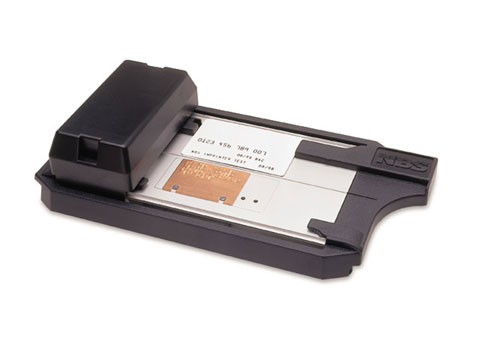
The patience of our postmistress, the lovely Alice, was severely tested by the various obscure requests of yours truly combined with the confusing instructions from her colleagues at Post Office central. For some bizarre reason, at their insistence, the chip and PIN machine was eschewed in favour of an ancient old imprint machine - a museum piece which clearly hadn't seen action since Suez.

I was reaching for the quill and parchment when Alice finally managed to wipe all the dust off and produce an acceptable carbon copy. Still, it worked and it was alot more fun than the usual joyless visit to a miserable high street bank. If only Gordon B appreciated that.

Cashier number three please!

Read more...

Sunday, 1 June 2008

How to...get a US visa

Believe it or not, if you travel by cargo ship to the US you need to get a visa before you travel. Unlike Brits who fly or even come by scheduled cruise ship you don’t qualify for the usual visa-waiver scheme. That means dollars – lots of ‘em – and allowing plenty of time to be processed through the system.

So force a grin, remind yourself that you’re travelling in a far more interesting (and environmentally-responsible) fashion and take it on the stiff-upper lip.

You will need to apply for an non-immigrant visa – that means scrubbing yourself up and going for an interview at the US embassy in Grosvenor Square (if you happen to live near London, of course).

In order to book your appointment you must first dial up the premium-rate phone number 09042-450100 (£1.20/minute - a typical call lasts 10 minutes). Try and book your interview appointment for as early as possible in order to minimise your wait in line.


In exchange for the fee ($131 at the time of our applying) you are sent an interview confirmation letter. You are also directed to DS-156 form, which you must complete online. Chaps aged 16-49 are also required to fill in one extra form, in order to assure the authorities of their good intentions.

On the day of your interview, book the morning off work and take a brolly (you are made to wait outside), along with the heap of documents required to prove that you a fine upstanding subject of her Britannic majesty. Mobiles, backberries, peapods and other fruitily-titled or otherwise electronic equipment are not welcome so take a good book.

Be prepared for a long wait, but a relatively short ‘interview’. You will go to two separate counters – one to hand in your documents and the other, for your ‘interview’ – more a quick chat. Our interviewer was a nice, friendly fellow who had no hesitation in granting us the standard ten year visa.

Then comes the sting in the tail – arranging the return of the passport you have so willingly just handed over the counter. You have no choice but to use the couriers, standing like vultures, at the exit. Laughingly-entitled ‘Secure mail Services’, I found them without question the most useless postal company I have ever encountered (and that is against some pretty stiff opposition).

I’ll spare you the details but take care to be very specific about how, where and when you’d would like your passport returned before parting with (up to) twenty notes. You must sign in person for the delivery when it finally comes.


Read more...

The what a to-do list

As of 12th April our to-do list read:

1) Book ship from Hong Kong to Los Angeles
2) Book Eurostar tickets
3) Book Trans-Siberian express tickets
4) Book US visa appointment (09042-450-100; £1.20/minute!!)
5) Get Russian visa
6) Look what other visas we need and book appointments:
- Mongolia
- China
- Vietnam
7) Book insurance
8) Get jabs
9) Organise WWOOF Japan placement(s)
10) Book Japan Rail Pass


It took us months to even work out what we needed to do. There’s not a book on the shelf about how to travel without flying. Hurrah for the Man in Seat in 61 and Google without which we would probably still be working out how to get to Finland (major stop #1 on The Trip).

With 26 days to go, all of this list – bar (2) booking the Eurostar and (4) getting a U.S. Visa – remains outstanding. So if anyone else is planning to do a similar trip, you should find this blog useful. It could save you a lot of time...

Read more...

Wednesday, 28 May 2008

How to...cross an ocean without flying

There are no ferries or passenger ships across the Pacific and only the QE2 or Queen Mary cruise ships across the Atlantic. You’ve got to take a cargo ship...

There are a few tour operators who deal in freighter ship travel, two of which are in London:

Strand Travel
Cruise People
NSB
(through Frau Gloger)


A few things we learnt about cargo ship travel:

a) Cargo ships only carry up to 11 passengers

b) Therefore you have to book your berth in advance

c) Cargo ships rarely go where tourists want, they go where cargo is needed. Your journey is somewhat determined by the routes available (but there are plenty)

d) When you’ve found a good route, note that they go infrequently (e.g. monthly)

e) Even when you have a departure date, it’s likely to change (depending on weather, loading of cargo etc)

f) Paying for the voyage is going to hurt. So you have to be philosophical about it; the price includes travel across a massive distance and includes accommodation and three meals a day. You probably would pay the same price flying to the same destination and staying in hotels over the same time period. But in addition you get the cargo ship experience (sea dogs, swells and sunshine) for FREE! It’s a bargain really.

g) You need visas for every country the ship stops in. For us, this means a Chinese and American visa. Arriving in America on a cargo ship discounts you for a waiver-free tourist visa. You need to get a B-1 ten-year multiple entry tourist visa, and for that you need a visa interview. The travel agencies can help here.


Read more...